
Querying
How semantic queries are written, compiled and made fast.
 Querying
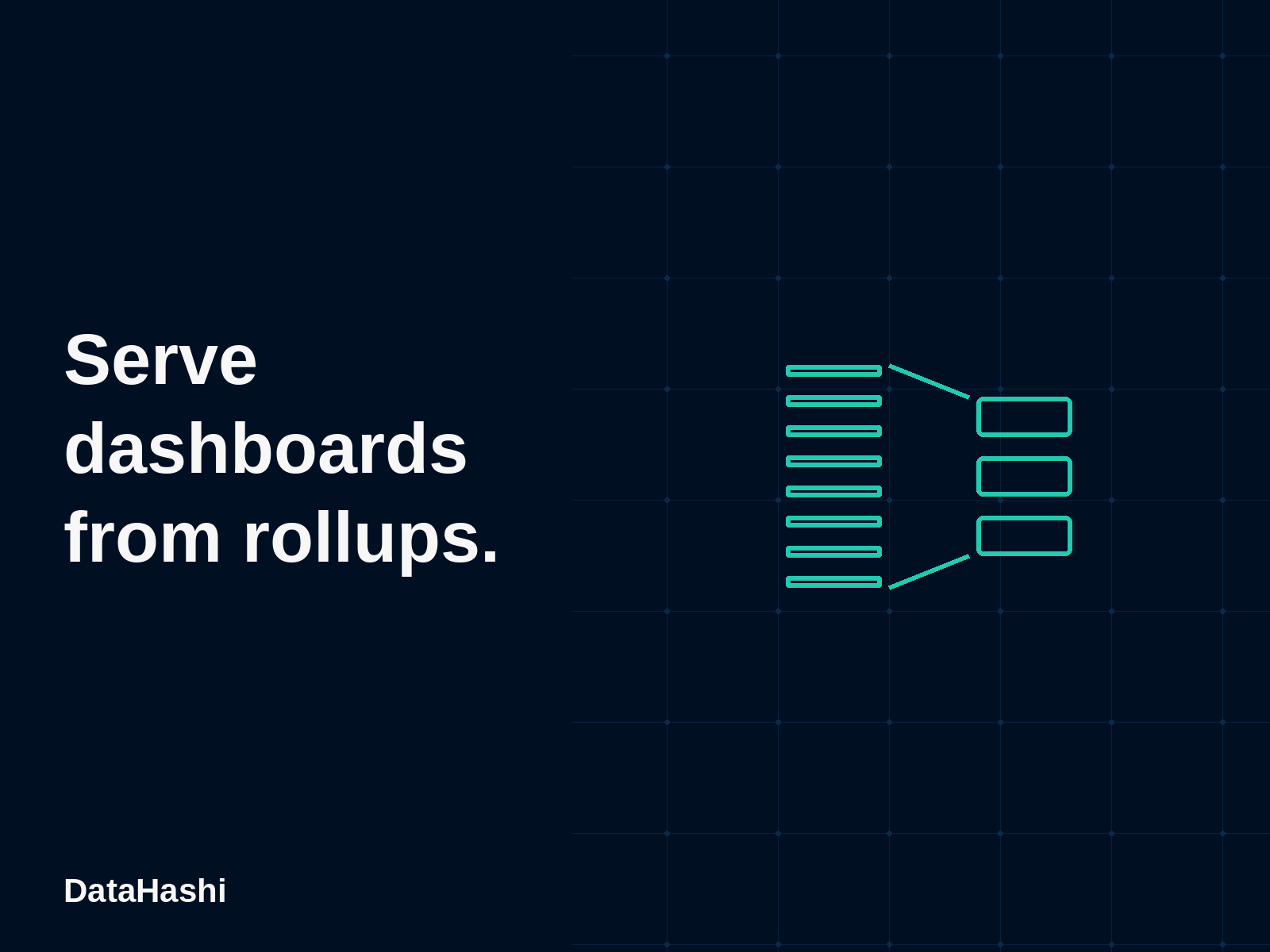
Serve a morning dashboard from rollups, not raw scans
How pre-aggregation rollups serve morning executive dashboard queries from pre-computed tables rather than scanning raw transaction tables. Querying
Reading compiled SQL to debug wrong answers
When a semantic query returns a number that feels wrong, read the compiled SQL. datahashi exposes it from `run_semantic_query` so you can see exactly how names became joins and filters. Querying
Rollups: answer hot questions without the warehouse
Rollups now ship in datahashi, hosted and self-hosted. Declare one in YAML, and the engine builds it through your Query Runner and answers matching queries from it - with the limits stated up front.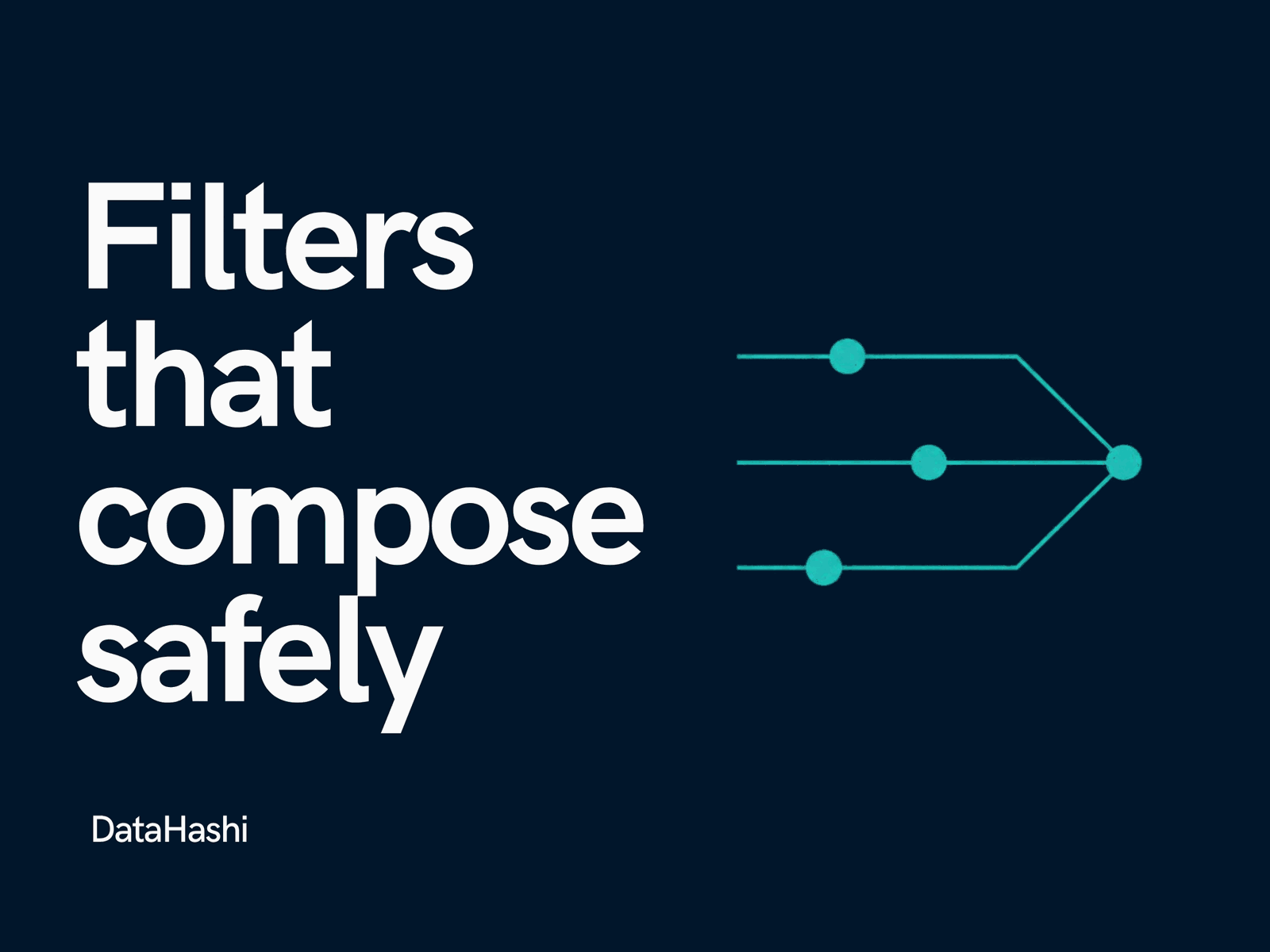 Querying
Filters that compose safely
Two filters interacting should narrow a result, not rewrite the metric. How datahashi treats filter composition as a first-class part of every semantic query.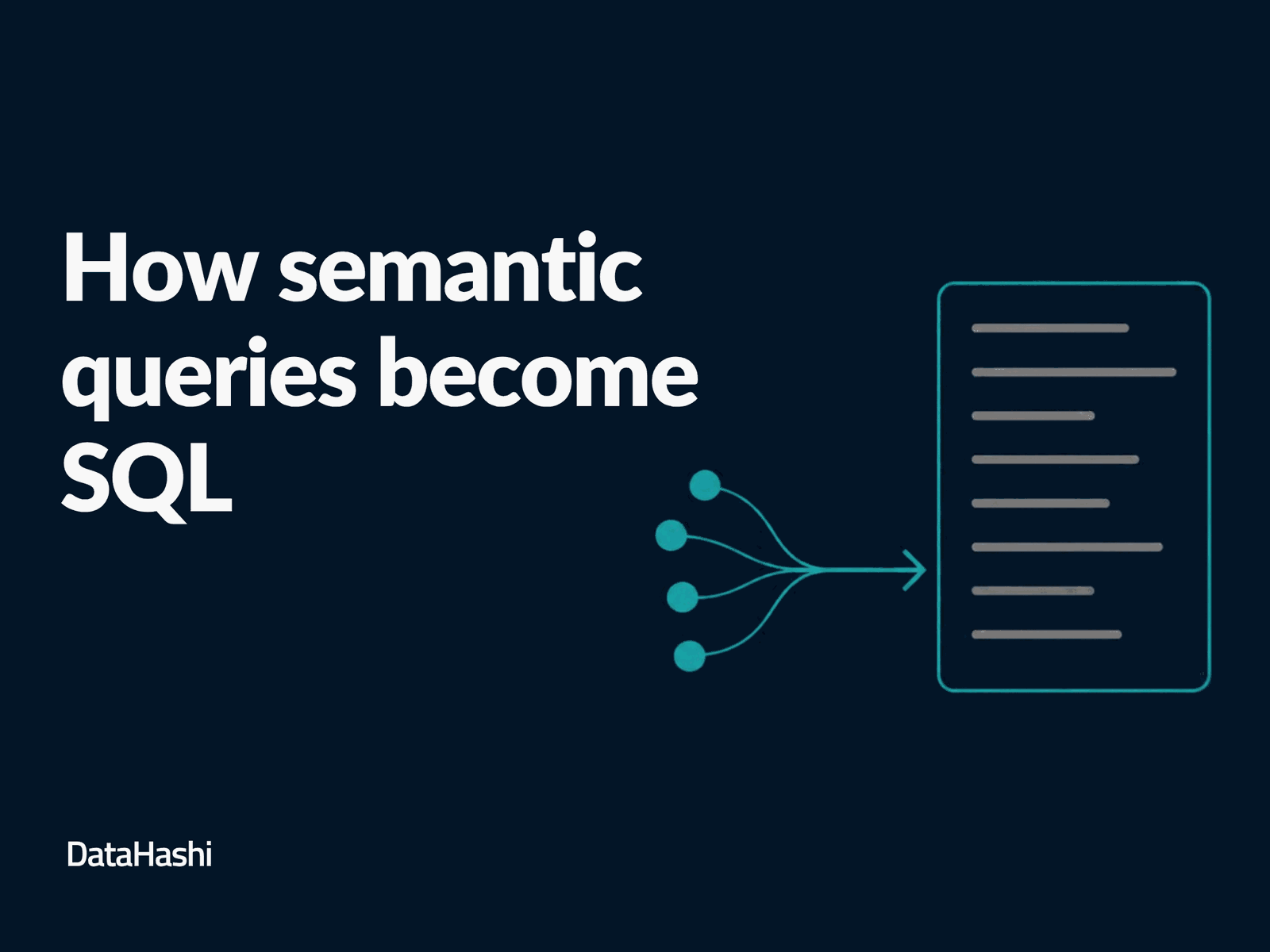 Querying
How semantic queries become SQL
A semantic query names metrics and dimensions; the warehouse still speaks SQL. Here's how datahashi compiles one into SQL you can inspect and trust.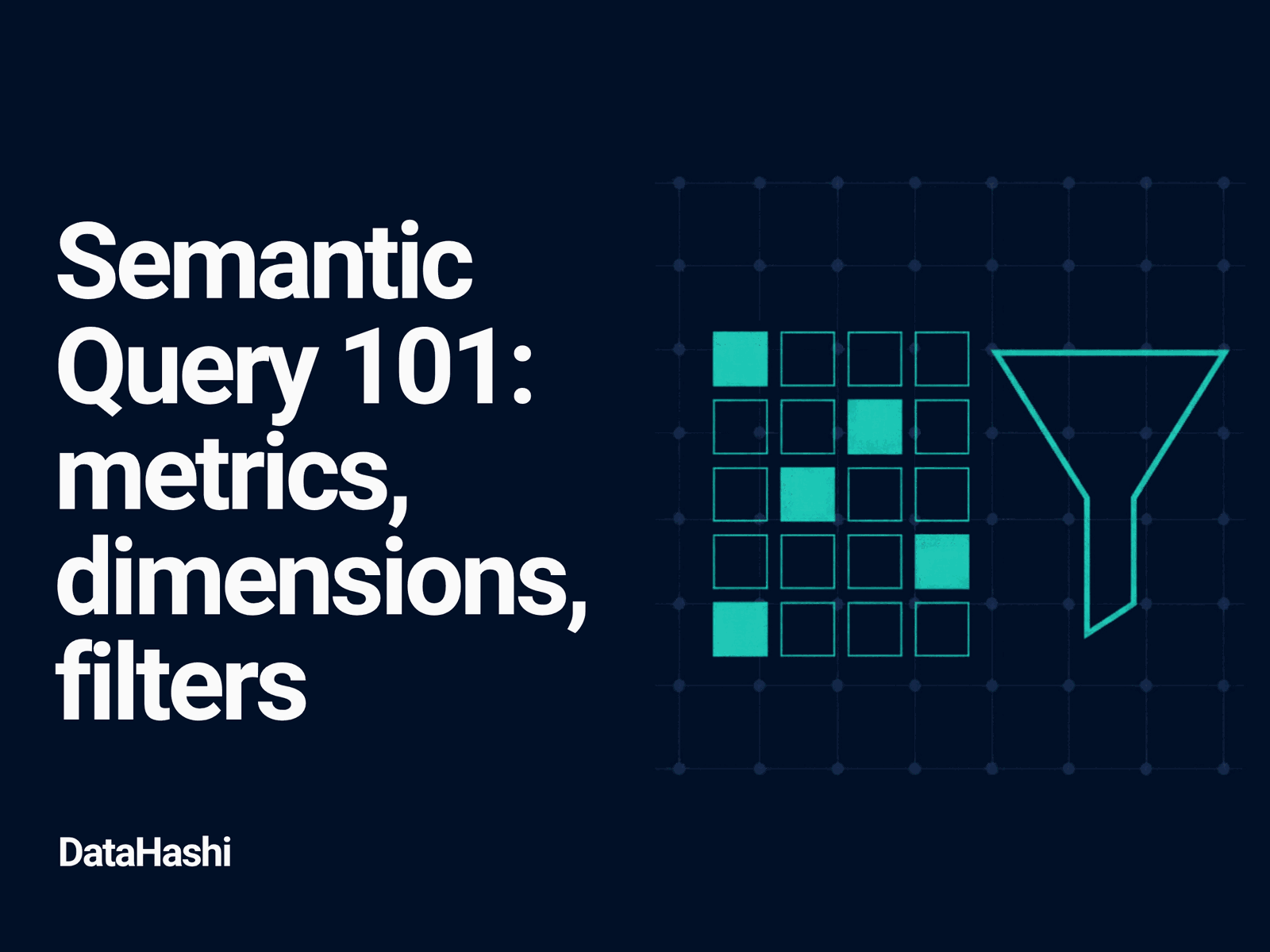 Querying
Semantic Query 101: metrics × dimensions × filters
Introduce the semantic query triad so any consumer can ask the same question the same way.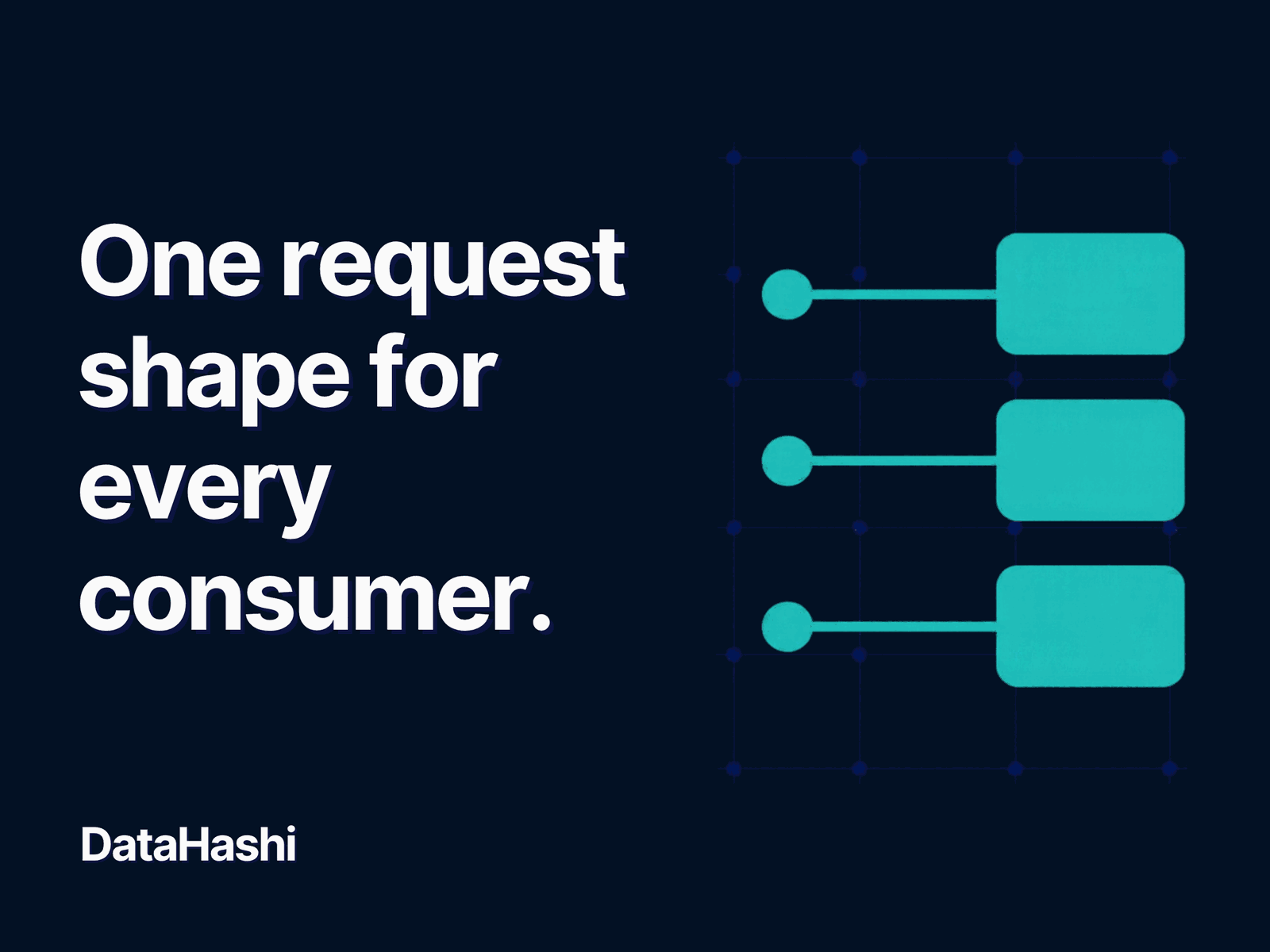 Querying
One request shape for every consumer
Dashboards, APIs, and agents should ask for metrics the same way. One structured request shape keeps definitions stable and tooling simple. Querying