
Modeling & metrics
Defining entities, dimensions and metrics that stay correct.
 Modeling & metrics
Why marketing CAC and ROAS never matched finance
How governed derived metrics and transparent lineage unify customer acquisition cost and return on ad spend across marketing channels and finance. Modeling & metrics
E-commerce category tree revenue: safe hierarchical rollups
How retail merchandisers drill down SKU, category, and department revenue without fan-out bugs in a thin semantic layer. Modeling & metrics
SaaS activation and retention without 14 CTEs
How product managers analyze SaaS user activation and weekly retention across entity join graphs in a thin semantic layer. Modeling & metrics
Finance close: one ARR across board decks and dashboards
How semi-additive snapshot measures and model tests keep ARR balances consistent across reporting tools in a thin semantic layer. Modeling & metrics
Derived metrics without double counting
Derived metrics compose other metrics, not raw columns — get the expansion order wrong and a ratio silently double-counts. Here's how datahashi keeps composition honest.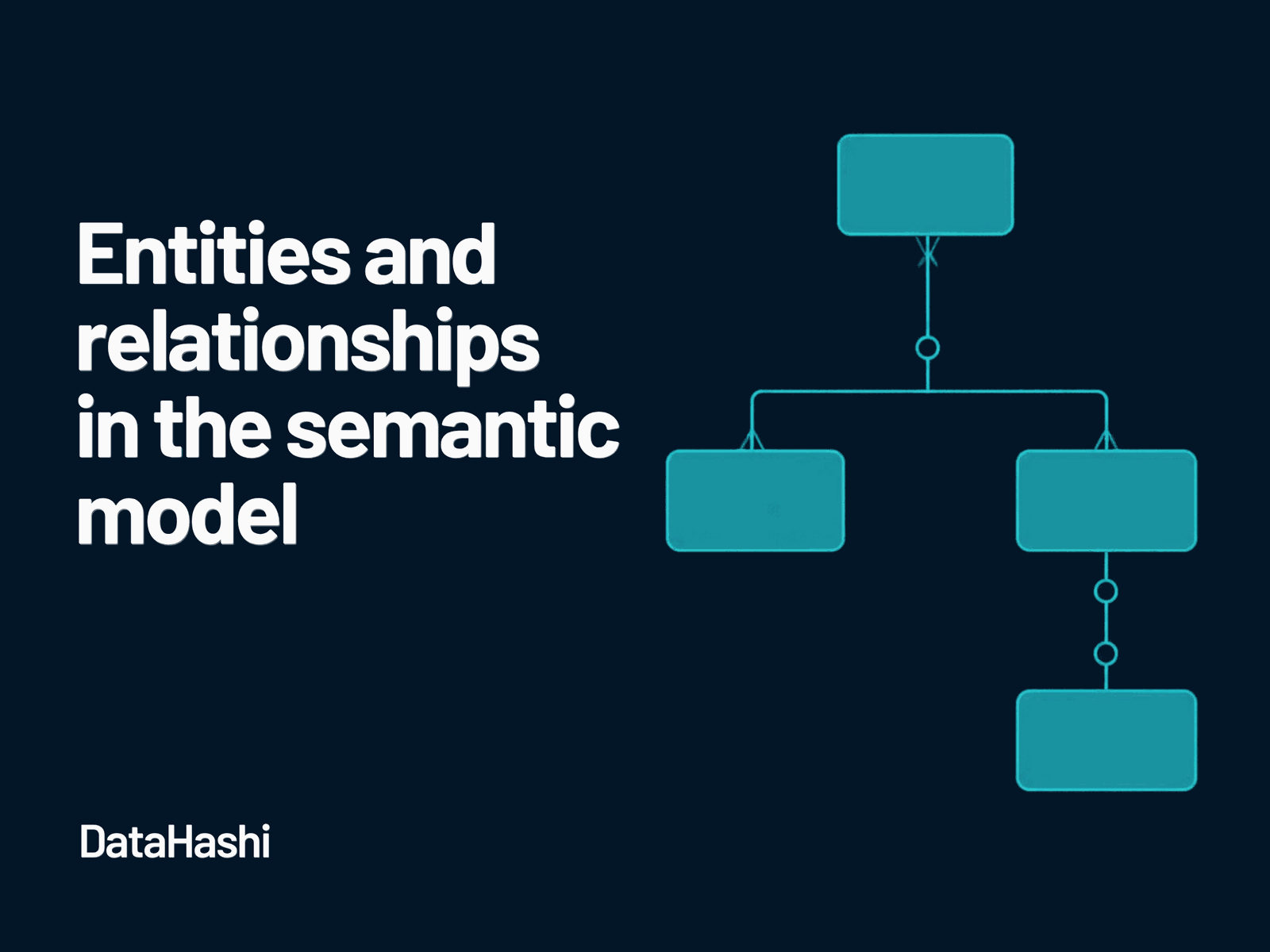 Modeling & metrics
Entities and relationships in the semantic model
Metrics sit on entities. Relationships tell the layer how to join without letting every consumer reinvent the graph. Modeling & metrics
Time grains and asymmetric aggregates
Time grain is part of the metric contract. Some aggregates roll cleanly across grains. Others do not, and agents need to know the difference. Modeling & metrics
Additive vs non-additive metrics
Why some metrics can be summed across dimensions and time, and why others must never be. Modeling & metrics
Fan-out-safe metrics explained
What fan-out risk looks like in metric queries and how to keep aggregates correct. Modeling & metrics
Dimensions that do not explode joins
How to model dimensions so metric grain stays correct and joins do not multiply rows. Modeling & metrics
Your first metric: name it, do not hand-write SQL
Walk through defining a first certified metric by name and measure without pasting hand-written SQL into the agent path. Modeling & metrics